
AED Devices Guide: Understanding the Impact of AED Devices
- CPR PLUS
- Jan 5
- 3 min read

Sudden cardiac arrest is a leading cause of death worldwide. Immediate response is critical to saving lives, and this is where Automated External Defibrillators (AEDs) play a vital role. These devices are designed to deliver an electric shock to the heart, restoring a normal rhythm during cardiac emergencies. Understanding the impact of AED devices can empower individuals and communities to act swiftly and confidently in life-threatening situations.
AED Devices Guide: What You Need to Know
AED devices are portable, easy-to-use machines that analyze the heart's rhythm and, if necessary, deliver an electric shock to help the heart re-establish an effective rhythm. They are commonly found in public places such as airports, schools, shopping centers, and workplaces. The accessibility of AEDs has significantly increased survival rates from sudden cardiac arrest.
Key features of AED devices include:
Automated voice prompts: Guide users through the process step-by-step.
Built-in safety mechanisms: Prevent shocks if not needed.
Battery-powered operation: Ensures portability and readiness.
Electrode pads: Attach to the patient’s chest to monitor heart rhythm.
For example, in a busy airport, a bystander can quickly grab an AED, follow the voice instructions, and provide life-saving treatment before emergency medical services arrive. This rapid intervention can mean the difference between life and death.

How AED Devices Save Lives
The impact of AED devices extends beyond just the technology. Their presence in public spaces and workplaces has transformed emergency response protocols. When someone experiences sudden cardiac arrest, every second counts. Brain damage and death can occur within minutes without intervention.
AEDs increase the chances of survival by:
Providing immediate defibrillation: Early shocks improve survival rates by up to 70%.
Enabling non-medical personnel to act: No advanced training is required to use an AED.
Reducing response time: AEDs are often closer than emergency responders.
Increasing public awareness: The presence of AEDs encourages people to learn about cardiac emergencies.
Consider a scenario where a person collapses in a shopping mall. A bystander retrieves an AED, applies the pads, and follows the prompts. The device detects a shockable rhythm and delivers a shock, restoring the heart’s rhythm. Emergency services arrive shortly after, and the victim survives with minimal complications.
How is AED Different from CPR?
While both AED and CPR (Cardiopulmonary Resuscitation) are critical in cardiac emergencies, they serve different functions and complement each other.
CPR involves chest compressions and rescue breaths to manually maintain blood circulation and oxygenation.
AED delivers an electric shock to correct an abnormal heart rhythm.
CPR keeps blood flowing to vital organs until the heart can be restarted. However, CPR alone cannot restore a normal heart rhythm if the heart is in ventricular fibrillation or pulseless ventricular tachycardia. This is where the AED becomes essential.
Using AED and CPR together:
Start CPR immediately after recognizing cardiac arrest.
Retrieve and turn on the AED as soon as possible.
Follow the AED’s voice prompts to apply pads and deliver shocks if advised.
Continue CPR between shocks until emergency responders arrive.
This combined approach maximizes the chances of survival and recovery.
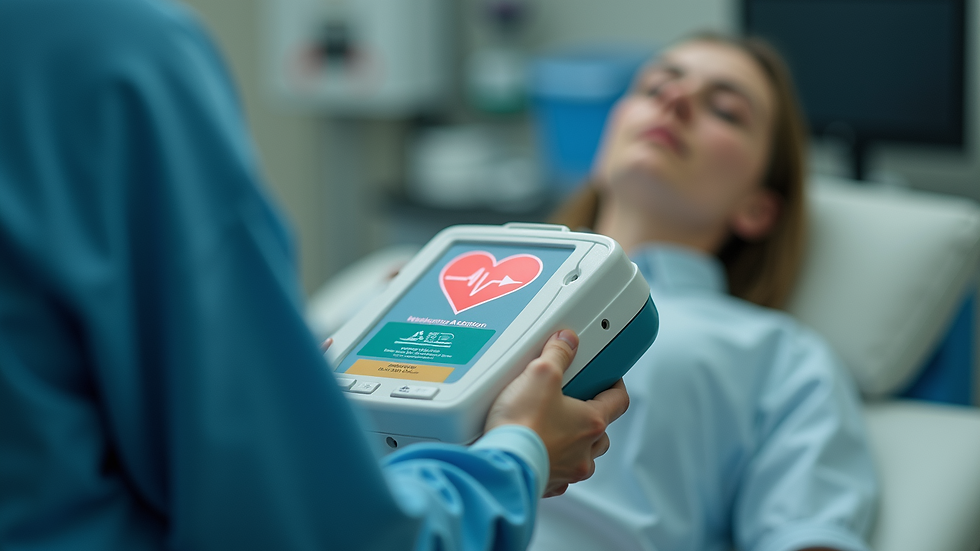
Practical Tips for AED Use and Maintenance
To maximize the impact of AED devices, proper use and maintenance are crucial. Here are some practical recommendations:
Regular training: Even though AEDs are user-friendly, periodic training helps build confidence and familiarity.
Routine checks: Inspect the device monthly to ensure batteries and electrode pads are functional and within expiration dates.
Clear signage: Place AEDs in visible, accessible locations with clear instructions.
Emergency planning: Incorporate AED use into workplace or community emergency response plans.
Encourage awareness: Promote AED knowledge through workshops, posters, and drills.
For example, a school that conducts quarterly AED drills ensures that staff and students know how to respond quickly. Maintenance checks prevent device failure during emergencies.
The Future of AED Technology and Accessibility
Advancements in AED technology continue to improve their effectiveness and ease of use. Innovations include:
Smart AEDs: Devices that connect to emergency services automatically.
Improved algorithms: Enhanced detection of heart rhythms for more accurate shocks.
Compact designs: Smaller, lighter devices for easier transport.
Integration with mobile apps: Guidance and location tracking for nearby AEDs.
Increasing accessibility is also a priority. Governments and organizations are working to place AEDs in more public spaces and provide free or low-cost devices to communities.
By embracing these developments, the impact of AED devices will grow, saving more lives and fostering safer environments.
Understanding the impact of aed devices is essential for anyone interested in emergency preparedness. These life-saving tools empower ordinary people to make extraordinary differences during cardiac emergencies. With proper knowledge, training, and accessibility, AEDs can transform outcomes and offer hope when every second counts.


Comments